
E315: ‘Your Labs Are Normal’: The Midlife Women's Health Lie You Need to Stop Believing
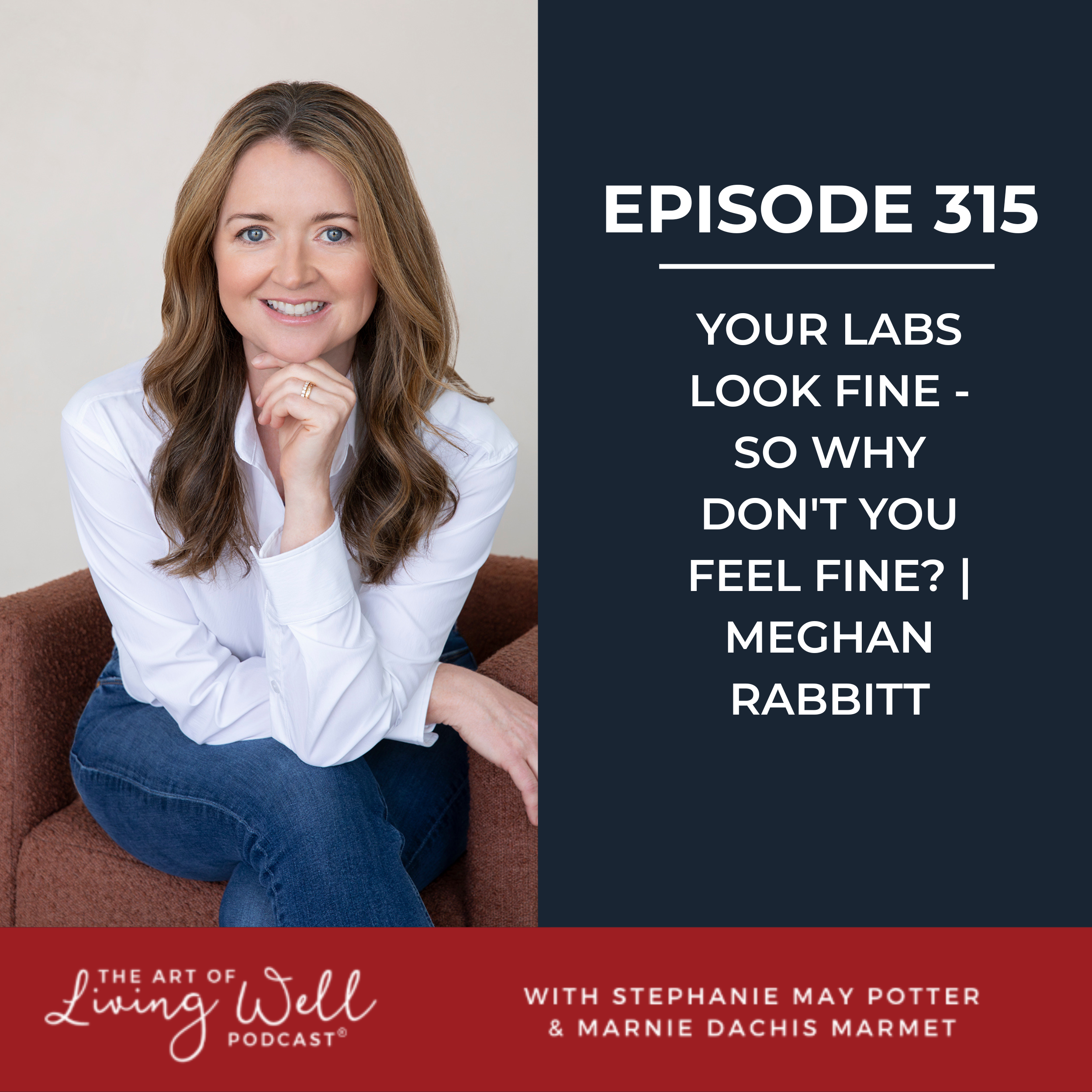
Have you ever sat in a doctor’s office, exhausted, overwhelmed, and looking for answers, only to be told that your lab results look ‘completely fine’? It is an incredibly common experience for women, especially as we age. You know deep down that you certainly do not feel fine, yet without the medical language to explain your symptoms or a clinician who truly listens to your concerns, you might simply walk away feeling dismissed and defeated. The truth is, when it comes to midlife women's health, many of us are trying to navigate a complex, confusing system without a roadmap.
Unfortunately, most of us never received a solid education about our own bodies. Unless you went to medical or nursing school, you were probably left piecing together what is normal from high school health classes, friends, and the internet. Because of this lack of baseline knowledge, too many women normalize feeling unwell. We assume our fatigue, pain, or mood swings are just the price of getting older.
But it doesn't have to be this way. In this week’s podcast discussion featuring Meghan Rabbitt, award-winning journalist and author of The New Rules of Women's Health, a powerful message emerged: it is time for women to take the reins. We need to empower ourselves to ask better questions, seek better care, and finally understand what is happening inside our bodies. If you are ready to stop accepting ‘fine’ and start thriving, here is your guide to taking ownership of your health.
Why Taking Charge of Midlife Women's Health is Important Today
It is easy to view midlife as a quiet medical limbo, a time right after your childbearing years have passed but before you need regular visits to specialized doctors for age-related conditions. However, treating this period as a waiting room is a massive missed opportunity.
Midlife is actually a crucial, proactive window for preventative care. By touching base with healthcare providers now, you can improve your health markers and dramatically reduce the risk of future specialized issues, such as heart disease and dementia. Many of the conditions we assume are simply an inevitable part of old age are highly preventable if we take the right steps during our forties and fifties.
Bridging the Gap in Medical Research
To understand why advocating for yourself is so critical, we have to look back. For decades, the medical establishment simply did not study women adequately. Women’s health was historically underfunded, and clinical research was largely conducted on men. As a result, we lacked a collective understanding of how the female body differs from the male body. For example, women's hearts and brains behave differently and exhibit completely different symptoms when in distress compared to men's.
While the medical system still has catching up to do, the landscape is shifting. Today, we have access to better, evidence-based information powered by female researchers and clinicians. We can now arm ourselves with this knowledge, allowing us to critically evaluate the health advice we hear on social media and determine what actually makes sense for our unique family histories and bodies.
Breaking the Habit of Powering Through
Taking charge of your health also means unlearning generational mindsets. Many of us were raised by mothers who meant well but taught us to "suck it up, buttercup." We were conditioned to be tough girls, to not complain, and to power through our pain without making a fuss.
But brushing aside your physical discomfort does not make it disappear. In fact, ignoring your body’s distress signals can be dangerous. As Meghan Rabbitt beautifully points out in her interview:
"What did that lead to? Years of ignoring symptoms, pushing through pain, which actually made our pain worse. It's time to say, 'No, I've got a niggling sense that something is wrong. I'm going to get care.'"
It is time to stop ignoring your intuition. If you have a feeling that something is off, honor that instinct.
How to Navigate a Fragmented Healthcare System
One of the biggest hurdles in midlife women's health is the system itself. Healthcare today is deeply fragmented. You might see a gynecologist for reproductive issues, a primary care physician (if you can find one accepting new patients) for general checkups, and a cardiologist for heart concerns. The problem? These doctors rarely talk to each other.
Many women do not realize that their gynecological history directly impacts their heart health. Complications during pregnancy like preeclampsia, a history of recurrent miscarriages, or even severe hot flashes during the menopause transition are all critical data points that a cardiologist needs to know. Because the system is not designed to connect these dots for you, you have to be the bridge between your doctors.
Treating Your Medical Care Like a Partnership
Gone are the days when whatever the doctor said was treated as the unquestionable word of law. The new standard of care is shared decision-making. You need to treat finding a doctor the same way you would treat hiring a team member at work.
When you have that first appointment, pay attention to your gut reaction. Does this clinician make you feel safe? Do they listen without rushing you out the door? Can you share your most vulnerable, even embarrassing, symptoms with them comfortably? If the interaction leaves you feeling small or dismissed, and you have the ability to look elsewhere, find someone new. Your doctor might be the medical expert, but you are the undisputed expert on your own body.
Preparing for Appointments Like a Pro (Yes, You Can Use AI!)

You wouldn't walk into a hair salon without an inspiration photo, and you shouldn't walk into a doctor's office without a plan. Showing up prepared completely changes the dynamic of your appointment. Clinicians appreciate engaged patients because it allows them to provide better, more targeted care.
One incredibly modern way to prepare is by utilizing Artificial Intelligence. While you should never rely on tools like ChatGPT to diagnose a condition (as the internet is full of biased and inaccurate information), you can use it as a brainstorming partner. Try entering a prompt like, "I am a 47-year-old woman experiencing X, Y, and Z symptoms. What are some thoughtful questions I should ask my primary care doctor?" Just remember to always leave your personal identifying details, like your name, date of birth, and private lab results, out of the prompt.
By bringing a prioritized list of symptoms, supplements you are taking, and targeted questions to your appointment, you transform a standard check-up into a collaborative, empowered health strategy session.
Making Sense of Your Hormones in Perimenopause
If you are in your forties or early fifties, you are likely intimately familiar with the chaotic, rollercoaster nature of perimenopause. This transition leading up to menopause is characterized by wild hormonal fluctuations. Your estrogen might spike one day and plummet the next, leaving you feeling entirely unlike yourself.
Replacing Frustration with Curiosity
It is so easy to blame every bad mood on being "hormonal." When you suddenly feel unexpectedly ragey at 9:00 AM or find yourself weeping over a commercial, your first instinct might be to roll your eyes at your own body. We tend to talk about our hormones with a deeply negative connotation.
But what if we reframed that relationship? Without our hormones, we wouldn't be who we are. They are incredible, complex messengers working hard behind the scenes.
"We need more reverence for our hormones as women. Thank you for creating this symphony in our bodies... And when we have that reverence for them, we can clue in a little bit more to when things might be off. Instead of just brushing it off, let me get curious. What's happening? How am I feeling?"
Getting curious means moving away from frustration and stepping into a place of observation.
Why Tracking Symptoms is Your Superpower

If you feel hormonally off, the absolute best step you can take is to start tracking your symptoms. You don't need a fancy system to do this, a simple notes app on your phone or a small notebook will work perfectly.
Write down exactly what you are feeling and when it happens. Note the time of day your hot flashes strike, when your mood dips, or when brain fog rolls in. By keeping a tangible diary of your daily experiences, you are gathering critical data. When you present this detailed log to a doctor, they no longer have to guess what is happening. They can clearly see the pattern of your perimenopausal hormone shifts, which enables them to offer real, effective treatments instead of vague reassurances.
A Gentler Approach to Nutrition for Midlife Women
In the wellness world, the pressure to optimize every single aspect of our lives is exhausting. We are constantly bombarded with messages telling us we need 30 grams of protein, 30 grams of fiber, a sauna session, and a perfect supplement routine before 8:00 AM. For a woman navigating the already stressful years of midlife, this drive for perfection can become incredibly overwhelming.
Quieting Food Noise and Ditching Diet Culture
A massive part of taking care of your midlife women's health involves healing your relationship with food and shedding the toxic weight of diet culture. Weight stigma alone keeps countless women away from the doctor's office simply because they dread stepping on the scale.
We also have a terrible habit of justifying our food choices. Think about the last time you were out to dinner with a girlfriend and a beautiful basket of fresh sourdough bread arrived. Did you find yourself saying, "I'm going to eat this because I had a hard workout this morning" or "I'll just have one piece because I was good today"? We need to quiet this constant food noise. You do not need to justify eating delicious food. You are allowed to eat simply for joy, nourishment, and connection.
Baby Steps for Adding Nourishment (Without the Overwhelm)
Instead of completely overhauling your pantry or punishing yourself with restrictive diets, embrace a gentler approach to nutrition: focus on addition, not subtraction. Find the lowest hanging fruit and start there.

Can you toss a handful of frozen spinach or a scoop of chia seeds into your morning smoothie to get an extra hit of fiber and protein? Great. Do that consistently until it becomes second nature. Master that one baby step before you even think about adding another health habit to your plate. Do not let the pursuit of perfection become the enemy of the good. Start exactly where you are, with what you have, and give yourself grace along the way.
Conclusion
Advocating for yourself in midlife doesn't mean you need to have a medical degree or execute a flawless wellness routine. It simply requires a willingness to educate yourself, a commitment to tracking your own body's unique signals, and the courage to build a healthcare team that truly respects your voice. You do not have to normalize feeling unwell, and you absolutely do not have to suffer through perimenopause and midlife changes in silence.
If this message resonated with you, please share it with a friend, sister, or daughter who needs a reminder that her health, her voice, and her body truly matter.