
E326: Midlife Hormone Optimization: Why Testosterone Is the Missing Piece for Women
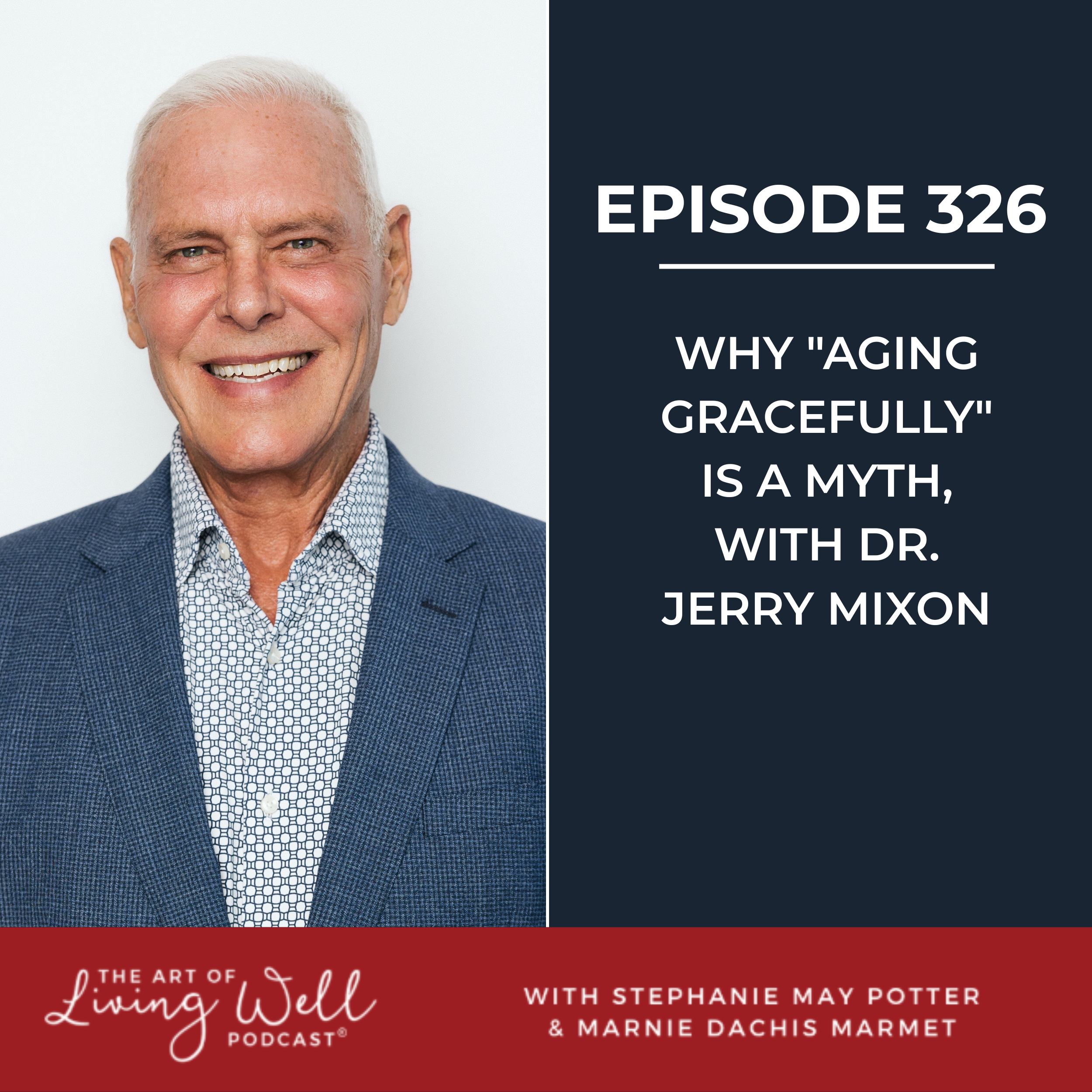
What if the way we’ve been taught to think about aging is completely backwards?
If you are a woman navigating midlife, you might be intimately familiar with the symptoms: feeling perpetually exhausted, dealing with unexplained weight gain, losing muscle tone, or struggling with sudden brain fog. Too often, society, and sometimes even our doctors, tell us that these changes are just an inevitable part of getting older. We are told to accept our shrinking energy reserves and to buy a bigger pair of jeans.
But what if you don't have to?
Welcome to the concept of longevity medicine. It is a shift in perspective that says you have far more control over your healthspan, the quality and vibrancy of your years, than you might realize. You don't just have to focus on how long you live; you can focus on how well you live.
If you want to feel vibrant, energetic, and strong for decades to come, it might be time to take a closer look at midlife hormone optimization.

Why Normal Doesn't Always Mean Optimal in Midlife Hormone Optimization
It is an incredibly frustrating, yet common, scenario for women in their 40s and 50s. You know something is off. You don't have the energy you used to, your moods are fluctuating, and you generally don't feel like yourself. You go to your doctor, they run some standard labs, and they cheerfully report back that everything looks "normal".
But you don't feel normal.
The problem lies in how standard medical guidelines define those normal ranges. Often, average ranges are based on the sick population of America, not on optimal health.
This is where the concept of bioindividuality becomes crucial. Everyone has a different baseline. If you don't know what your hormone levels were when you felt your absolute best, say, in your 20s or 30s, it is very hard to compare your current state to a generic "normal". Your normal might be completely different from the woman sitting next to you.
When it comes to midlife hormone optimization, a standard checkup usually isn’t enough. To get a true picture of what is happening in your body, you need comprehensive testing. A doctor practicing longevity medicine will often run an extensive panel, sometimes resulting in a 70-page printout, that looks at inflammatory markers, growth factors, and eight to ten different hormones. It is about looking at the whole picture, not just a small snapshot.
The Forgotten Hormone: Why You Need to Know About Testosterone
When we talk about menopause and midlife women, the conversation almost entirely centers around estrogen and progesterone. But there is a missing piece to this puzzle, and it is a big one.
It's Not Just for Men
There is a pervasive societal myth that testosterone is strictly a male hormone. Because of this, many women are completely unaware of the vital role it plays in their own bodies.
Here is a shocking fact: The primary hormone in a healthy young woman’s body is actually testosterone. In fact, a healthy young woman has two and a half to three times more testosterone in her system than she has estrogen.
"You did not develop a beard and male musculature when you were 20 years old and had your natural high testosterone. We've got this societal myth that women are hormonal." — Dr. Jerry Mixon
Because lab reports often measure estrogen and testosterone in different units, this vast difference is easily obscured, leading both patients and some physicians to misunderstand a woman's natural hormonal balance.
The Plunge After 50
By the time a woman hits her menopausal years, usually around age 50, her hormone levels don't just gently decline, they plummet.
While a woman will lose about 50% of her estrogen and 70% of her progesterone, she loses a staggering 80% to 85% of her testosterone.
This massive drop in anabolic hormones (like testosterone and DHEA) is a primary driver behind many of the symptoms women dread during midlife. It is responsible for the shift away from muscle and toward fat, the sudden inability to tolerate stress, and the rise in anxiety and depression.
It is so common for women in menopause to be prescribed anti-anxiety medications or antidepressants that it almost seems as though the medical community believes menopause is caused by a Prozac deficiency.
The Benefits of Restoration
Restoring testosterone to optimal levels isn't about trying to turn a woman into a man, but it is about giving a woman back her natural vitality.
Adequate testosterone provides drive, ambition, and self-confidence. It makes you feel capable of accomplishing your goals and dramatically improves your tolerance to stress. It is also a potent, natural antidepressant.
Furthermore, studies suggest that restoring testosterone levels in midlife women can even help reduce the incidence of breast cancer by up to 80%.
Creating Your Personalized Hormone Balance
So, how do we fix it? If midlife hormone optimization is the goal, how do we get there safely and effectively?
Why One-Size-Fits-All Doesn't Work
The first rule of medicine is simple: Anything strong enough to help is strong enough to hurt. Every medical decision requires a careful balancing act because nobody reacts the exact same way to the same treatment.
The second rule is equally important: The proper dose of anything is just enough to do the job.
But what is enough? That is where bioindividuality comes back in. There is enormous variation from woman to woman. We all have different body types, different stress levels, and different physiological needs. A one-size-fits-all approach to hormones is bound to leave many women feeling unbalanced.
Custom Compounded Solutions
If you walk into a supplement store, you might see testosterone boosters aimed at women. Unfortunately, these over-the-counter options are generally ineffective. A supplement might raise your levels by 6% to 10%. If your level is currently at a 5, and it needs to be closer to 50 or 70, a 10% boost is only going to get you to 5.5. It is not enough to make a dent in how you feel.
The most effective route for midlife hormone optimization is often through custom compounded creams.
"We want to put everything in balance because all of those hormones are there for a reason. They all do things. And if we give you part of them and not all of them, we're going to have an unbalanced situation." — Dr. Jerry Mixon
Working with a physician to formulate a cream specific to your exact needs allows for a holistic approach. The goal shouldn't be to just blindly raise testosterone or estrogen. The goal is to safely recreate the balanced hormone profile you had when your body functioned at its absolute best, usually around age 20 or 25.
The Value of the Physician Partnership

This level of care requires time. You cannot achieve true midlife hormone optimization in a hurried, three-minute doctor's visit where a prescription is scribbled out before you've even fully explained your symptoms.
Optimal care involves a deep partnership with a physician who will sit down with you for a full hour, face-to-face. They need time to review your extensive lab work, discuss how life has impacted your health so far, and actively listen as you explain your energy levels, any struggles you are facing, and your overall well-being. It is a continuous process of measuring, adjusting, and tweaking doses every few months to ensure you remain in balance.
You Deserve to Feel Vibrant
Navigating midlife as a woman can feel overwhelming, but you do not have to accept exhaustion, weight gain, and brain fog as your new normal.
By advocating for your health, pushing for comprehensive lab testing, and exploring the science of personalized hormone optimization, you can reclaim your vitality. You can build a life where you feel confident, strong, and energized for the decades ahead.
Don't settle for normal when you could be feeling optimal. Speak to a longevity medicine specialist about comprehensive hormone testing today, and start your journey back to feeling like your best self.