
E325: How Silent Reflection Can Transform Your Holistic Health Journey in Midlife
Midlife is a beautiful, deeply fulfilling, but undeniably loud season. Between growing careers, raising teenagers, supporting aging parents, and managing the unpredictable physical shifts of perimenopause and menopause, the midlife squeeze can leave us feeling completely stretched thin. We are constantly pouring out our energy, managing households, answering questions, and rushing to the next deadline. In the middle of all this noise, it is so easy to lose touch with ourselves.
When we think about taking care of ourselves, our minds usually jump to physical solutions. We wonder if we need a new supplement, a stricter diet, or a harder workout routine. But what if the most radical, transformative move you could make for your well-being right now isn’t doing more, what if it’s stepping back and sitting in pure silence?
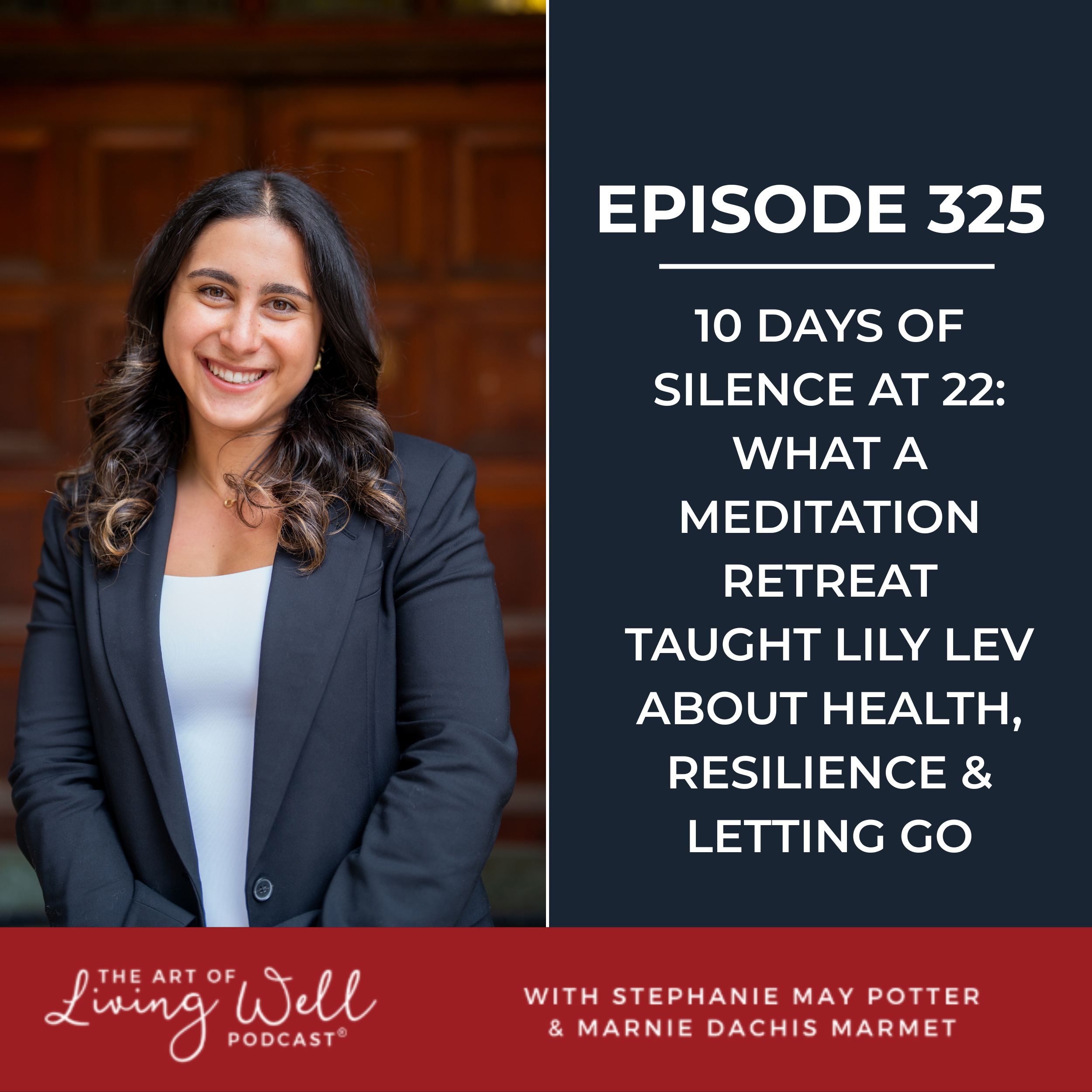
On our latest episode of The Art of Living Well podcast®, we had the pleasure of chatting with Lily Lev. Lily was Marnie’s daughter’s college roommate, and over the past few years, we’ve watched her ask deep, insightful questions about well-being that took us decades to start asking. While studying biology, health, and society at the University of Michigan, Lily chose to spend her college spring break doing something extraordinary: a 10-day silent meditation retreat in Thailand.
While packing up for a monastery in Thailand for ten days of total silence might not be on your immediate calendar, the wisdom Lily brought back touched our hearts deeply. Her experience reminded us that inviting mindfulness, emotional detachment, and silence into our routines can completely reframe how we care for ourselves. Here is how adopting a retreat mindset can breathe new life into your own holistic health journey.
Redefining Wellness: The Heart of Your Holistic Health Journey
Moving Beyond Just Food and Fitness
It’s so easy to trap ourselves into believing that wellness is entirely physical. We spend hours analyzing what’s on our plate, counting our steps, tracking our sleep scores, and trying to stay active. We tend to view our bodies like machines that just need the right input to produce the right output.
Lily knows a thing or two about physical performance. She’s run half-marathons, competed in a HYROX fitness challenge, and thrives on heavy strength training. Yet, as she shared with us on the show, her perspective shifted dramatically when she realized that physical endurance is only a single piece of the puzzle. Pushing yourself physically through a workout is a completely different skill set than sitting quietly and facing your own unedited thoughts without a phone, a book, or a distraction.
As midlife women, we carry immense mental and emotional weight that no amount of cardio or clean eating can fully resolve. A true holistic health journey requires us to step beyond physical metrics and nourish our mental, emotional, and spiritual spaces.
Embracing the Whole Health Model
During an internship with the Department of Veterans Affairs, Lily worked with the Whole Health model of care, an approach we absolutely love. Rather than treating symptoms in isolation, this model views health as a wheel with interconnected spokes, including physical health, emotional well-being, spirit, physical environment, relationships, and professional growth.
When we asked Lily about this, she pointed out how traditional health conversations almost always default to diet and exercise. Yet, when any spoke on that wheel is out of alignment, the whole ride feels bumpy. In midlife, taking an honest inventory of your whole health wheel allows you to ask: Where am I over-investing, and where am I running on empty? True vitality comes when all parts of our lives are given care and attention.
Lessons from the Silence: Learning to Sit with Discomfort
The Physical and Mental Challenge of Pausing
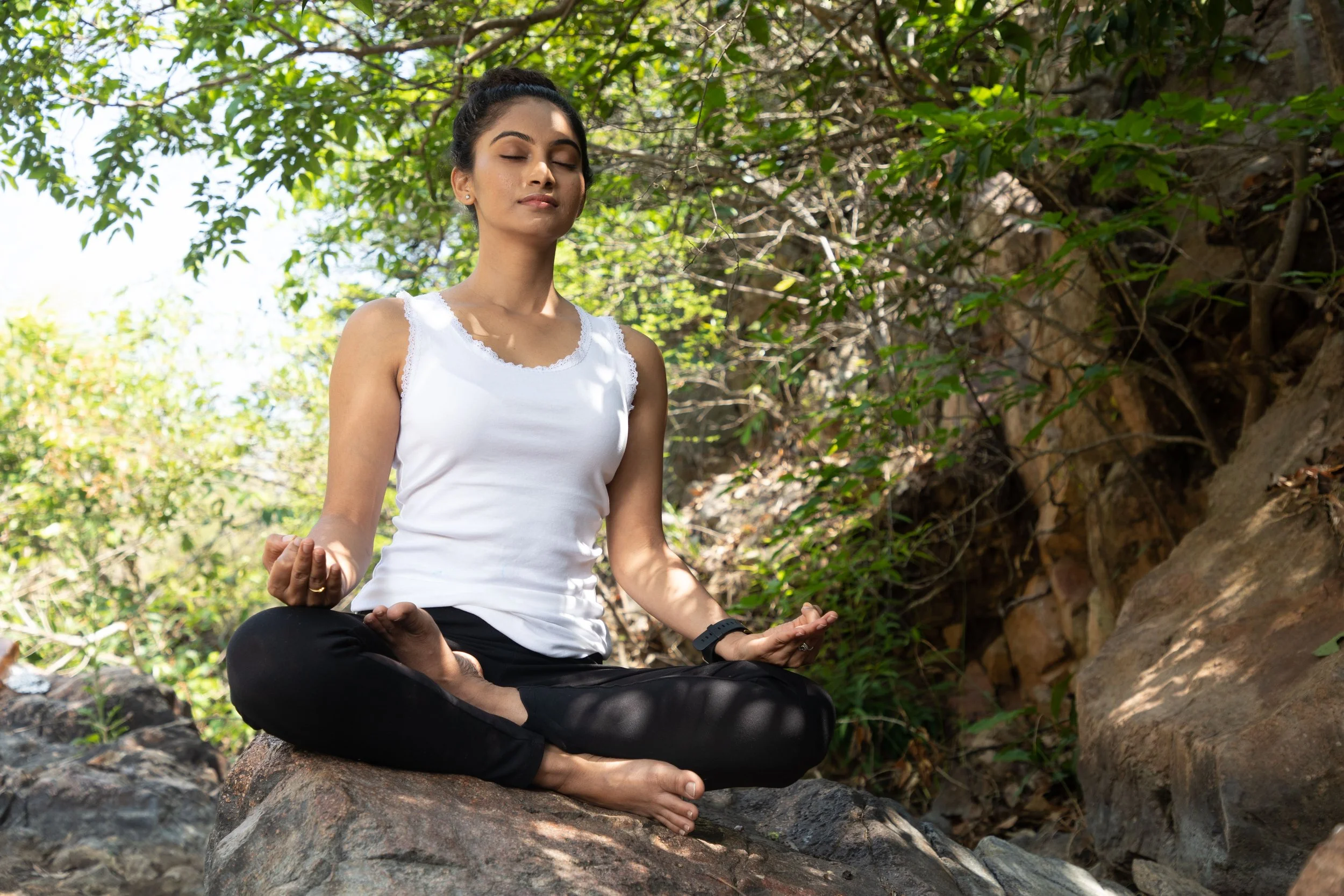
Let’s be honest: for most busy women, the idea of sitting still for even twenty minutes sounds intimidating. Our days are structured around productivity, so slowing down can trigger feelings of restlessness or guilt.
Lily’s retreat was no luxury spa getaway. It meant waking up at 4:00 AM to a ringing gong, sleeping on thin mats without air conditioning in over 100-degree heat, and spending up to eight hours a day in meditation. Participants could not speak, make eye contact, read, write (aside from small note-taking), or use electronics. Even walking meditation was performed so slowly that crossing a small room took several minutes!
What surprised us most was when Lily shared that staying silent was actually the easiest part. The real struggle was the physical ache of sitting cross-legged for hours, which quickly became a mental battle. How often in our daily lives do we rush to escape physical or emotional discomfort? Whether it’s reaching for our phones, grabbing a sugary snack, or filling every hour with tasks, we tend to avoid pain at all costs. Learning to stay present with discomfort, rather than fleeing from it, builds an unbelievable level of inner resilience.
"Being able to push myself to sit through a lot of just those sessions where I was really uncomfortable... and just knowing that I have to sit with that was really challenging, but then so rewarding at the end." — Lily Lev
Vipassana: Letting Go of Emotional Attachments
A central focus of Lily’s retreat was Vipassana meditation, which teaches you to observe whatever enters your consciousness without judgment. Instead of trying to force a quiet mind, you simply acknowledge what you are feeling in that exact moment, labeling thoughts like breathing, pain, hungry, or sound, and then letting them go.
This practice is grounded in the principle of Anicca, or impermanence. In Eastern philosophy, suffering is created when we attach too strongly to our emotions. When we cling to positive moments, we feel sadness when they end; when we fight against uncomfortable emotions, we amplify our own pain.
For women in midlife navigating mood fluctuations, stress, or shifting life chapters, this concept is incredibly freeing. When a wave of overwhelm or irritability strikes, you don't have to fight it or feel guilty about it. You can simply notice it, label it, and remember that it is temporary. It will pass, just like every emotion before it.
The Transformative Power of Loving-Kindness
Sending Compassion to Friends, Foes, and Ourselves
During the final days of the retreat, Lily participated in Loving-Kindness (or Metta) meditation. While she initially worried it might feel a bit cliché, it ended up being one of the most profound parts of her journey.
In this practice, you systematically send love, peace, and well-wishes to three different people: a good friend, a neutral stranger, and someone you consider an "enemy" or someone who has hurt you. Sending love to a friend feels effortless. Sending it to a stranger is gentle. But consciously wishing well to someone who has caused you pain requires intentional grace.
Many of us carry lingering wounds, old family friction, or past betrayals into midlife. Loving-Kindness reminds us that at our core, everyone wants to feel loved and safe. People often react poorly out of their own unhealed hurts. Extending compassion doesn't mean excusing bad behavior; it means opening a doorway to heal your own heart.
Reclaiming Your Energy from Anger

One insight from Lily's conversation that really stuck with both of us was about the nature of resentment. As her retreat leaders pointed out, holding onto anger toward someone doesn't affect that person at all, it only drains your own vitality.
"The anger that you feel is not affecting the other person. It's only impacting you. So you're kind of only hurting yourself by projecting anger to them." — Lily Lev
When we harbor frustration or anger, we willingly surrender our peace to someone else. Midlife is an incredible season to lay down those heavy backpacks. When you practice letting go of old grudges, you reclaim precious emotional energy that can be poured back into your health, your passion, and your loved ones.
Bringing the Retreat Mindset into Your Holistic Health Journey
You Don’t Need 10 Days in Thailand
If the idea of an intensive silent retreat feels completely out of reach, take a deep breath. You do not need to fly across the globe or sit in quiet isolation for over a week to benefit from these principles.
In fact, Lily candidly admitted to us that maintaining a formal 30-minute daily meditation practice after returning home has been challenging. And that is okay! Wellness isn't about perfection, it's about intentionality.
You can weave retreat-inspired quiet into the fabric of your daily life. It can be as simple as spending the first five minutes of your morning sipping tea in silence before looking at your phone, taking three slow, conscious breaths before stepping into a meeting, or sitting quietly in your car for a moment after pulling into the driveway. Small pockets of quiet add up in powerful ways on your holistic health journey.
Aligning Physical Movement with Mental Peace

As we navigate our 40s, 50s, and beyond, our relationship with physical fitness naturally evolves. Rather than exercising out of punishment or strict control, movement should feel like an act of self-care that supports our mental well-being.
Lily shared that her love for working out stems from how much it boosts her mood and connects her with community. Whether you love power walking in nature, lifting weights, practicing restorative yoga, or dancing in your kitchen, choose movement that restores your spirit while honoring your body.
Embracing the Art of Living Well
At the end of the day, a holistic health journey isn't about piling more obligations onto your busy schedule. It's about peeling away the unnecessary noise, listening inward, and honoring what your body and mind truly need. It's about remembering that true health involves your heart, mind, and spirit just as much as your physical body.
When we asked Lily what ‘the art of living well’ means to her now, her answer was so simple and wise: it’s about having quality connections, prioritizing time with the people you love, and truly enjoying your life. We couldn't agree more.