
E320: Lyme Disease Symptoms You Shouldn't Ignore (And How to Prevent Tick Bites)

Welcome back to another deep dive from The Art of Living Well Podcast®. For so many of us, getting outside is a non-negotiable part of our daily wellness routine. Whether you are an avid hiker logging miles in the woods or someone who loves feeling grounded while pulling weeds in your garden, nature is incredibly healing. But lurking in the tall grasses is a hidden risk that we need to talk about.
Understanding Lyme disease symptoms and practicing proper tick bite prevention is important for protecting our health without living in fear. Today, we are unpacking an eye-opening conversation with Allie Moresco, a tick-borne disease survivor, executive board chair of Project Lyme, and a recognized advocate for Lyme disease awareness. Allie spent two agonizing years searching for an accurate diagnosis before learning she had Lyme disease along with multiple co-infections. Now, she’s on a mission to help others catch the signs early.
The Reality of Lyme Disease Symptoms: It's Closer Than You Think
In her early twenties, Allie had a thriving PR career and was living the highly driven life she had always envisioned. Then, she attended a yearly family trip to northern Michigan. Though she followed her parents’ strict instructions to wear tall socks, a hat, and bug spray, she felt like she had picked up a terrible bug within a week of returning home.
Her initial Lyme disease symptoms mimicked a summer cold, accompanied by a full-body spotted rash. When she sought help from her doctor, her physical symptoms were completely dismissed. She was repeatedly told her blood work was fabulous and that her very real pain was simply the result of stress, anxiety, or working too hard.
"I felt like I was in my early 20s, living with dementia, because from one day to the next, I couldn't remember things. I still have whole chunks of my memory that are gone." — Allie Moresco
Over the course of two years, her mystery illness progressed into crushing chronic fatigue, great weakness, and severe memory loss, eventually forcing her to take a two-year break from her career. Because the treatment process for Lyme disease often triggers severe die-off reactions (where you feel significantly worse before feeling better), it took Allie about eight years of jagged, up-and-down progress to finally reach a place where she considers herself "mostly well."
Debunking Common Myths About Tick Bites and Lyme Disease
There is a tremendous amount of misinformation surrounding tick-borne illnesses, which actively prevents people from getting prompt care. Let's clear up some of the most dangerous myths so you can advocate for yourself.
Myth 1: It Only Happens in the Deep Woods
You might think you are completely safe because you only garden in the city or stick to paved trails. However, urban tick bites are incredibly common. The New York Times recently published a large story detailing a massive uptick in tick bites happening right in the middle of Central Park.
Myth 2: It’s Only an East Coast Problem
Many medical professionals still operate under the outdated assumption that Lyme disease is strictly an East Coast issue. The reality is that Lyme disease has been found in all 50 states. California recently experienced one of its worst tick years in history, and in certain parts of Michigan, a staggering one in two ticks is currently testing positive for Lyme.
Myth 3: You Must See a Bullseye Rash
Waiting to see a textbook bullseye rash before seeking treatment is incredibly dangerous. Recent studies show that less than 50% of infected people ever present with a bullseye rash. Furthermore, when a rash does appear, it rarely looks like a perfect ring.
The Truth About Tick Size
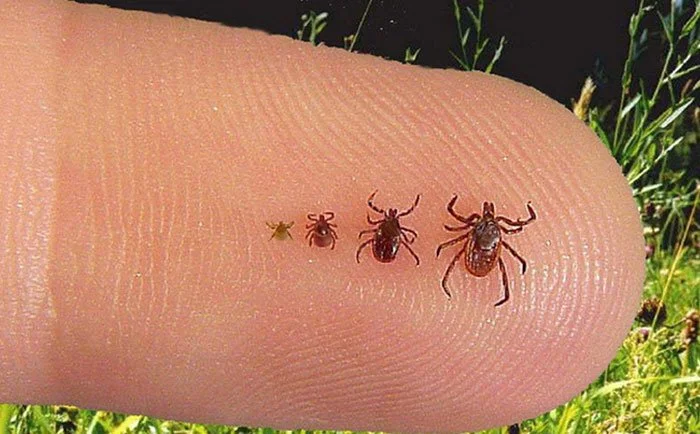
One of the most alarming facts about ticks is their microscopic size. In the spring, nymph ticks are the size of a pinhead, often resembling a tiny freckle. This size is exactly why so many people never even find the tick that bit them.
Proactive Prevention: How to Stay Safe Outdoors
Despite the trauma of her long illness, Allie still loves being outside tending to her urban garden. Her story isn't meant to make us terrified of the outdoors, it is meant to empower us with preventative tools.
Dress for Success
If you are heading into wooded areas or high grass, wear a hat, light-colored long sleeves, and long pants. Most importantly, tuck your pants securely into tall socks. Ticks typically grab onto your lower body and climb upward, which is why people often find them hiding behind their knees or in their private areas.

Embrace Natural Repellents
If you want to avoid harsh chemicals like DEET, Allie recommends non-toxic, essential oil-based tick sprays like Three Moms Organics or TickTok Naturals. They smell fantastic and allow you to stay safe without dousing your skin in synthetic chemicals.
The 60-Second Tick Check
Make a full-body tick check a non-negotiable part of your post-outdoor routine. It only takes 60 seconds to scan your body from your hairline to your toes. While many believe a tick needs to be attached for hours to transmit disease, conditions like Powassan virus can transmit in 15 minutes or less.
Allie also recommends using a microfiber tick mitt to wipe down your own body and your pets before coming inside. If a tick is crawling on you or your dog, it gets caught in the fabric loops, and you can simply toss the mitt in the dryer for 10 minutes to kill it.
What to Do If You Find a Tick (And What NOT to Do)
If you find a tick attached to your skin, you must remove it safely and avoid outdated folk remedies.
Ditch the Old Wives' Tales
Never use a match to try and burn a tick off, and do not smother it in dish soap or Vaseline. These methods traumatize the tick, causing it to regurgitate everything in its system directly into your bloodstream, significantly heightening your infection risk.
The Right Way to Remove a Tick
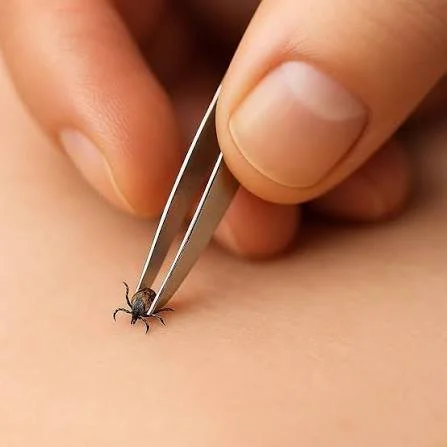
The absolute safest way to remove a tick is by using fine-tipped tweezers. Grasp the tick as close to your skin as you possibly can, and pull straight up strongly. Keep fine-tipped tweezers in your hiking backpack, car, and home so you are always prepared.
"No matter how badly you might want to kill that tick or flush it down your toilet and watch it suffer, fight the urge and put it either in a plastic bag or a jar and send it for tick testing." — Allie Moresco
Don't Flush It, Test It
Instead of angrily flushing the tick, place it in a sealed bag or jar and send it for testing. Some universities and states offer free testing, or you can use a commercial lab. Testing provides incredible peace of mind and gives your healthcare provider critical information if symptoms begin to appear.
Understanding Other Tick-Borne Illnesses
Ticks carry much more than just Lyme disease, including Alpha-Gal Syndrome (a mammalian meat allergy), Babesiosis, and Bartonella. If your standard Lyme tests come back clean but you are still experiencing unexplained symptoms, explicitly ask your provider to test for these co-infections.
Finding Hope and Advocating for Your Health
Tick-borne illnesses are incredibly sneaky. Borrelia bacteria can hide in your lymphatic system, sometimes lying dormant for years until a stressful life event triggers the illness. Furthermore, standard two-tier Lyme tests are notoriously unreliable, missing a vast majority of early cases. If you have mystery symptoms or a history of a tick bite, self-advocacy is your greatest tool. Push for better testing, and do not be afraid to bring an advocate with you to your appointments.
Despite her dark journey, Allie holds tremendous hope for the future. Groundbreaking research, like the Maestro Study at MIT, is developing new ways to objectively measure symptoms that were previously considered immeasurable, like chronic fatigue. Accurate tick-borne illness testing is on the horizon.
We want you to keep hitting those trails, tending to your gardens, and prioritizing your outdoor wellness. Just remember to grab your natural tick spray, tuck your pants into your socks, and advocate fiercely for your own health!